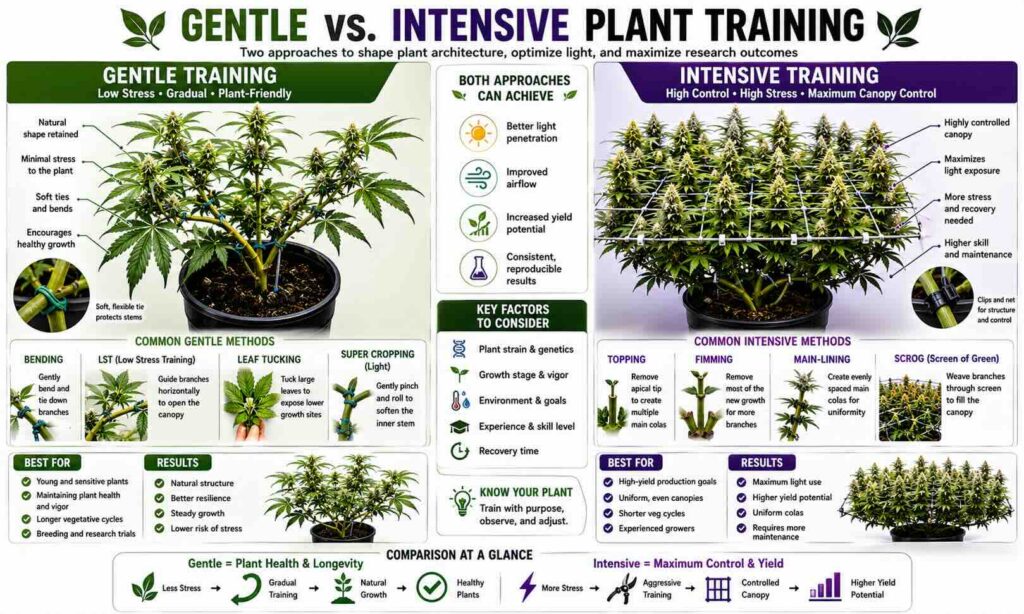
Plant training has become a common practice in modern cannabis cultivation because it allows growers to influence plant structure and improve the efficiency of their growing environment. Among the many training methods available, two broad categories are frequently discussed: Low Stress Training (LST) and High Stress Training (HST). While both approaches aim to manage plant development and optimize canopy structure, they differ significantly in how they interact with plant growth.
Understanding the differences between these methods helps growers choose techniques that align with their cultivation goals, experience level, and growing environment. Neither approach is inherently superior in every situation. The most effective strategy often depends on the genetics being cultivated and the specific objectives of the grower.
What Is Low Stress Training?
Low Stress Training refers to cultivation techniques that gently guide plant growth without causing significant physical damage. The objective is usually to create a more even canopy, improve light distribution, and encourage balanced development throughout the plant.
Because LST relies on gradual adjustments, many growers consider it a beginner-friendly approach. The technique allows cultivators to shape plant growth while minimizing disruption to normal development.
Patience is often one of the most important aspects of successful low stress training. Small changes applied consistently over time can significantly influence plant structure.
The goal is to work with the plant rather than force rapid changes.
Understanding High Stress Training
High Stress Training includes techniques that involve more substantial intervention in plant growth. These methods are often used to influence plant structure, manage canopy development, or encourage specific growth patterns.
Because HST techniques place greater demands on the plant, timing and plant health become especially important considerations. Growers who use these methods generally pay close attention to recovery and overall plant condition throughout the cultivation cycle.
High stress approaches require a clear understanding of plant development and careful observation of plant responses.
When applied thoughtfully, these methods can become valuable tools within a broader cultivation strategy.
Comparing Canopy Management Benefits
Both LST and HST are commonly used to improve canopy management. A balanced canopy allows more consistent light distribution and can make environmental management easier throughout the growing cycle.
Low stress methods typically achieve these goals through gradual guidance, while high stress techniques rely on more direct structural changes. Each approach offers advantages depending on the grower’s objectives and cultivation style.
Successful canopy management often depends more on consistency and planning than on the specific training method chosen.
Understanding plant growth patterns helps growers select the most appropriate approach.
Choosing the Right Method for Your Genetics
Not all cannabis cultivars respond identically to training. Growth structure, vigor, and genetic characteristics can influence how a plant reacts to different cultivation techniques.
Growers interested in exploring modern autoflowering genetics can learn more through ww.ministryofcannabis.com. Understanding genetic characteristics helps cultivators evaluate which training strategies may be most appropriate for a specific growing project.
Matching training methods to plant characteristics often contributes to more consistent and predictable outcomes.
The most effective cultivation strategies are usually tailored to the genetics being grown.
Observation and Experience Matter Most
Whether using low stress or high stress techniques, observation remains one of the most valuable skills a grower can develop. Every cultivation environment is different, and plants may respond differently depending on environmental conditions and management practices.
Keeping records and evaluating plant responses over multiple growing cycles helps cultivators refine their techniques and improve future results. Experience often reveals which approaches work best within a specific setup.
Additional information regarding cannabis and medical cannabis topics can be explored through https://www.futura-sciences.com/sante/dossiers/medecine-cannabis-medical.
Continuous learning and adaptation remain central to long-term cultivation success.
Final Thoughts
Low Stress Training and High Stress Training are both valuable approaches to managing cannabis plant development. While they differ in intensity and implementation, both methods aim to improve canopy structure and support efficient cultivation practices.
By understanding the advantages and considerations associated with each approach, growers can choose training methods that align with their goals, genetics, and growing environment. Successful cultivation ultimately depends on observation, consistency, and a willingness to learn from each growing cycle.